
js-libp2p has been used in production for many years in IPFS and Ethereum, as well as a wide variety of other ecosystems. Today, we're excited to announce the release of js-libp2p v1.0.0!
What's new?
Smart Dialing
One of the major inefficiencies we recognized was how we dialed peers, particularly in the browser. Smart dialing is a dialing strategy that is more aware of the network topology and the reachability of the multiaddrs it is dialing. This has led to a significant reduction in the number of dials made and failed dials.
Circuit Relay v2
Circuit relay was introduced as a means to establish connectivity between libp2p nodes that wouldn't otherwise be able to establish a direct connection. Circuit Relay v2 has significant improvements over v1, including support for resource reservation and limitations on durations and data caps.
NAT Hole punching with DCUtR
The libp2p DCUtR (Direct Connection Upgrade through Relay) is a protocol for establishing direct connections between nodes through hole punching, without a signaling server. Implementing this in js-libp2p has benefitted browser nodes significantly.
WebRTC Private-to-Private Connectivity
Currently js-libp2p is the only implementation that supports private-to-private browser connectivity using WebRTC. This allows direct peer-to-peer connectivity within the browser regardless of whether nodes are located behind NATs/Firewalls.
WebTransport
WebTransport is a new web standard built on top of QUIC that allows establishing WebTransport connections to servers that only have self-signed certificates.
Performance Improvements
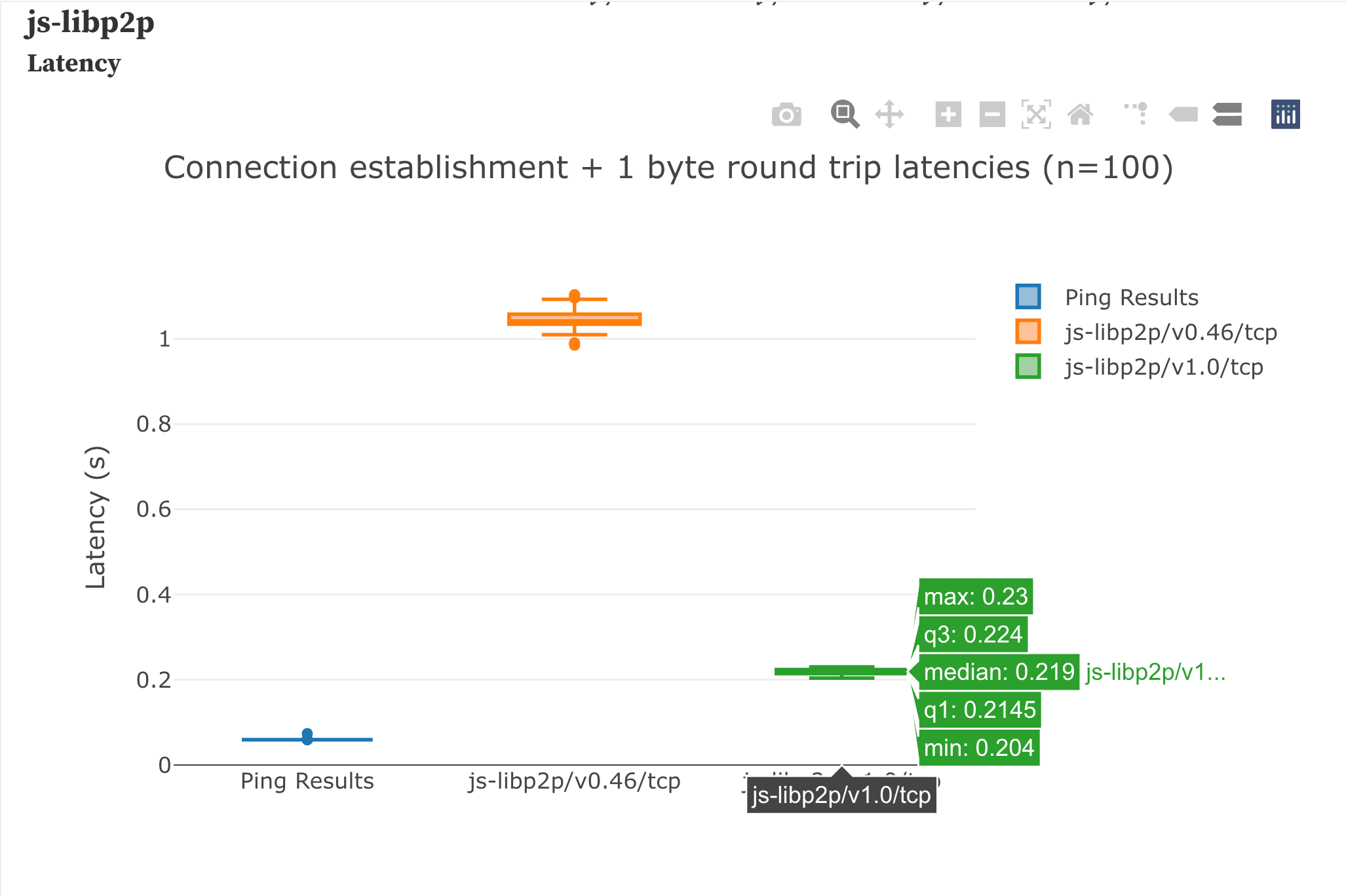
Reducing latency
We've made an 80%+ improvement in the time it takes to establish a connection between two js-libp2p nodes.
Increasing throughput
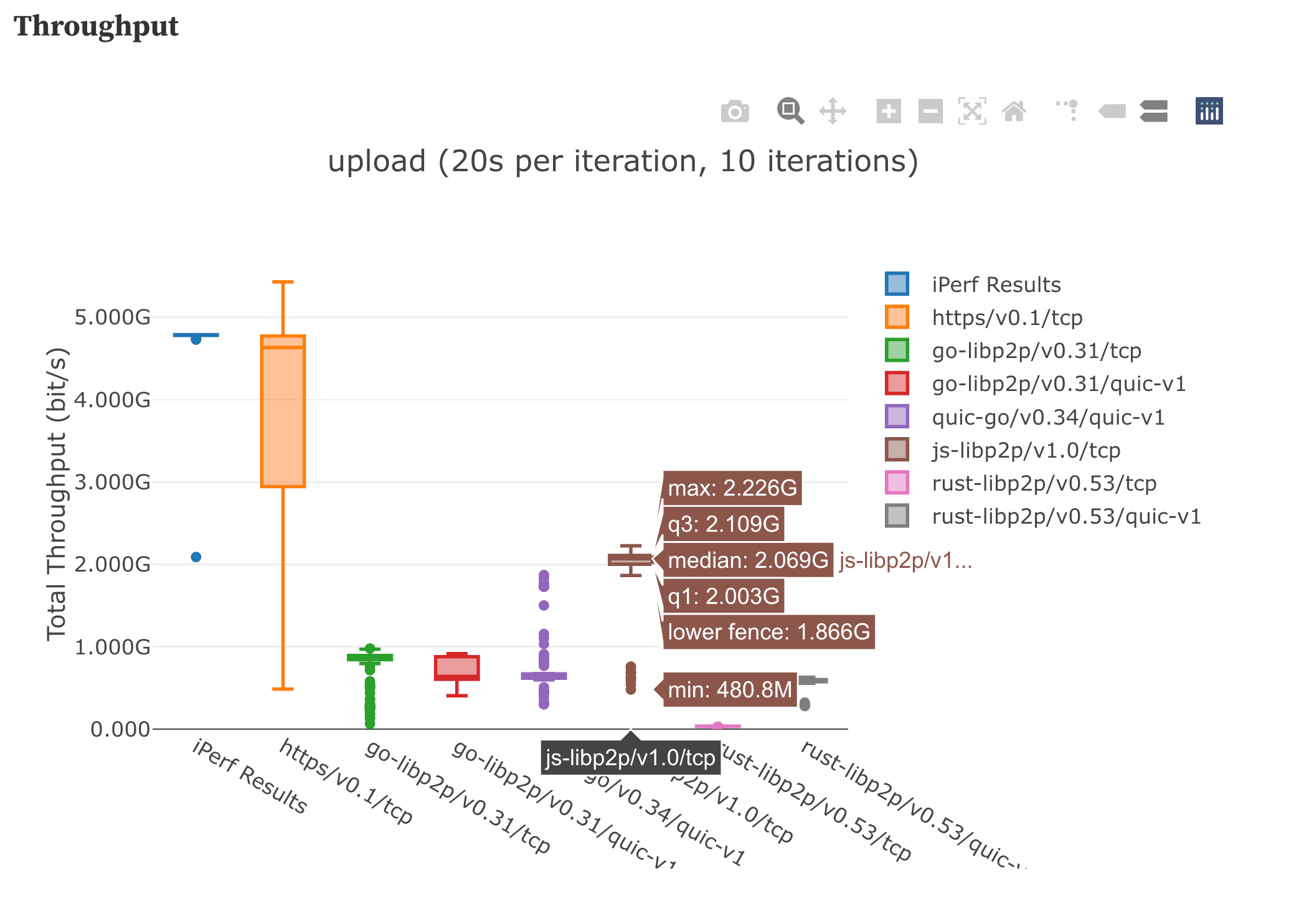
Currently js-libp2p has the highest throughput of any of the libp2p implementations, averaging 2.06GB/s on both uploads and downloads!
Reducing Dependencies
We reduced the bundle size by over 40% by removing modules that are tangential for many use cases.
Developer Experience Improvements
Monorepo Setup
The js-libp2p ecosystem once consisted of over 81 repositories! We consolidated all of the repositories into a single monorepo.
Modernization of Tooling
We've completely re-written our codebase in TypeScript and standardized our modules through ESM.
Documentation Improvements
We've introduced tools to automate and validate our docs, including a JS-docs based documentation generator and architectural diagrams.
What's next?
- React Native Support
- QUIC support
- Improved documentation
- Improved observability and metrics
Resources and how you can contribute
Thank you for reading!